
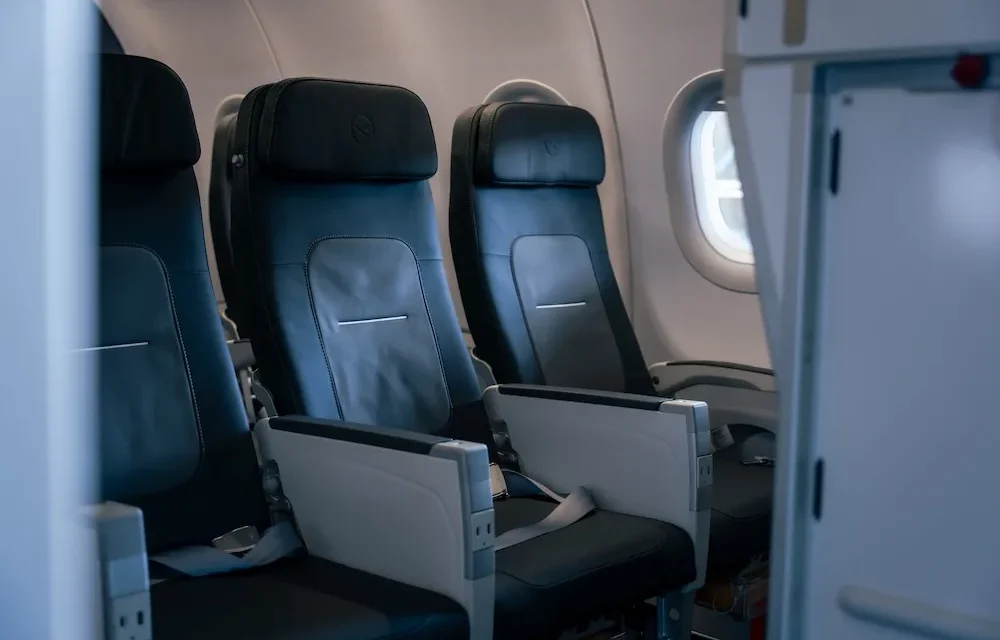
Lufthansa has started a focused modernization program for 38 Airbus A320 aircraft, with completion targeted by 2029.
The first fully retrofitted aircraft, A320 D-AIZY, returned to scheduled service in mid-February 2026, operating out of Munich on European short- and medium-haul sectors.
On paper, this reads like a passenger-experience update. In practice, it is an airline economics move applied to the backbone of Lufthansa’s European network. The stated retrofit cadence is one aircraft roughly every 30 days, which is important: it implies a controlled, industrialized process rather than a symbolic refurbishment. During each conversion, Lufthansa installs around 1,000 new components sourced from roughly 100 suppliers, a scale that underlines how “cabin” projects are also supply-chain and maintenance-engineering projects.
The most visible upgrades are deliberately practical. Lufthansa is introducing new seats (from Italian manufacturer Geven) with new headrests, while Business Class gets a backrest with notably increased recline. The cabin also receives overhead bins that are 40% larger, explicitly designed to allow bags to be stowed more efficiently (including vertical stowage), which is not a minor detail: on dense intra-European operations, overhead-bin friction is one of the most common micro-causes of delayed boarding and inconsistent on-time performance.
Equally important is the connectivity layer. Lufthansa is fitting USB-A and USB-C ports at every seat and adding integrated tablet/smartphone holders. This is not “nice to have” anymore; it is an expectation anchor that affects customer satisfaction scores and, indirectly, yield resilience, especially for time-sensitive travelers who dominate parts of the European business market.
The strategic signal is clear: Lufthansa is trying to narrow the product gap between its short-haul feeder legs and its long-haul premium positioning, using measurable, operationally relevant interventions. A larger bin, a standardized power setup, and a more comfortable seat will not change the network, but they can change the consistency of the experience—and consistency is what premium airlines sell when the schedule, not the seat, is the real product.

