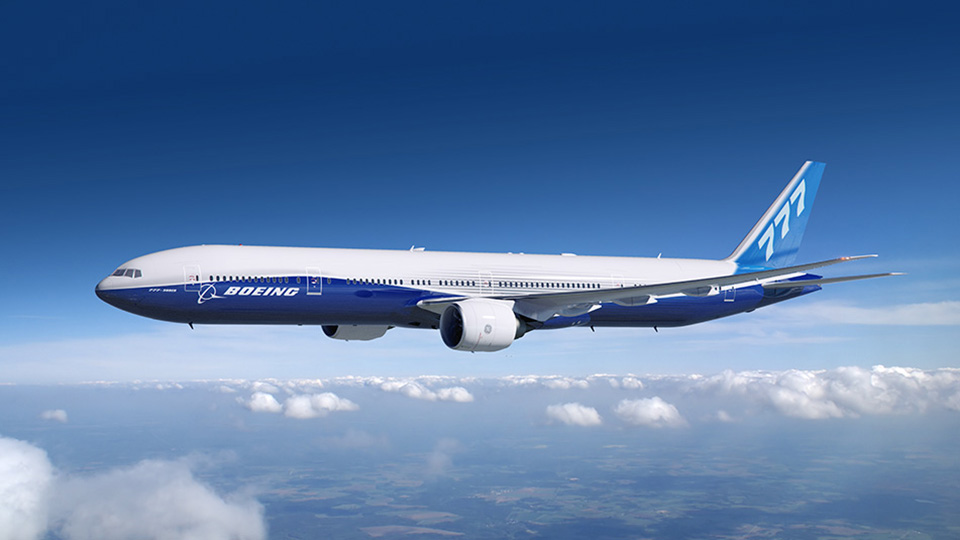
Boeing has recently and almost silently closed one of the most significant chapters in modern aviation history: the production of the 777-300ER.
Analysis by Dimitris Zopounidis, PhD Candidate, Data Science Laboratory, Technical University of Crete

Boeing has quietly brought production of the 777-300ER to a close. No big announcements, no ceremonial roll-out, just a silent ending for an aircraft that defined long-haul travel for nearly two decades. For the aviation industry, it is the closing of a chapter that changed the way airlines connected the world.
When the type first entered service in the mid-2000s, it represented a new balance between size, range, and efficiency. The -300ER could carry more than 350 passengers across 14,000 kilometers, and it did so with only two engines. That alone was a game-changer. Four-engine flagships such as the Boeing 747 and Airbus A340 suddenly looked heavy and expensive, while the 777-300ER delivered the same mission with lower fuel burn and maintenance costs.
The GE90-115B engine at its core, the most powerful ever built for commercial service, gave the aircraft the “muscle” it needed. Combined with Boeing’s design improvements, it created a machine that was tough, reliable, and surprisingly flexible. Airlines could use it on dense regional routes worldwide as easily as on ultra-long-haul connections across oceans.
It is no coincidence that Emirates, Qatar Airways, Cathay Pacific, and Singapore Airlines placed the 777-300ER at the heart of their growth strategies. Emirates, in particular, built its hub-and-spoke empire on the back of the aircraft’s capacity and endurance, turning Dubai into one of the busiest crossroads in global aviation.
But success in aviation never lasts forever. Over time, the arrival of new competitors such as the Airbus A350 and Boeing’s own 787, began to shift the landscape. Both offered lighter frames, lower emissions, and the kind of fuel savings that airlines could not ignore. At the same time, regulatory and social pressure to cut carbon footprints made the economics of the older 777 less attractive. Orders slowed, then almost disappeared.
Boeing has tried to manage this transition with the 777X, designed as the natural successor. Yet the new program has faced repeated delays, certification obstacles, and production setbacks. For airlines that had counted on replacing their 300ER fleets, this has created a difficult gap. Many have chosen to upgrade existing cabins and keep the aircraft in service well into the next decade. Others, particularly in Europe and Asia, have turned to the A350 as a more immediate alternative.
The end of production does not mean the end of the 777-300ER in the skies. Far from it. Hundreds remain in service, and they will keep flying for years. Boeing also sees opportunity in cargo: freighter versions and passenger-to-freighter conversions are already extending the aircraft’s usefulness, especially as global trade and e-commerce drive steady demand for long-haul freight capacity.
Still, the symbolic weight of this moment is significant. The 777-300ER was the last of the “big twins” from a time when capacity and sheer reach defined airline strategy. Today, the priorities are different. Efficiency, environmental performance, and operational flexibility stand alongside cost as equal measures of success. The next generation of aircraft, the 777X, the A350, and whatever comes after them, will have to meet these new demands.
Looking back, the 777-300ER was never just another widebody. It was a strategic tool. It allowed airlines to expand networks, reshape competition, and strengthen their global positions. Its retirement from production underlines how quickly the industry moves on, but also how enduring its impact will be.
The aircraft will continue to serve, particularly with Middle Eastern and Asian carriers, for many years to come. Yet the final delivery line closing marks something bigger: the end of one era and the uncertain beginning of another. For Boeing, the pressure is clear, the 777X has to succeed. For airlines, the task is balancing renewal with financial discipline. For passengers, it means watching one of the most recognizable aircraft of the last 20 years slowly fade from the spotlight.