
Editor’s Note by Dimitris Zopounidis
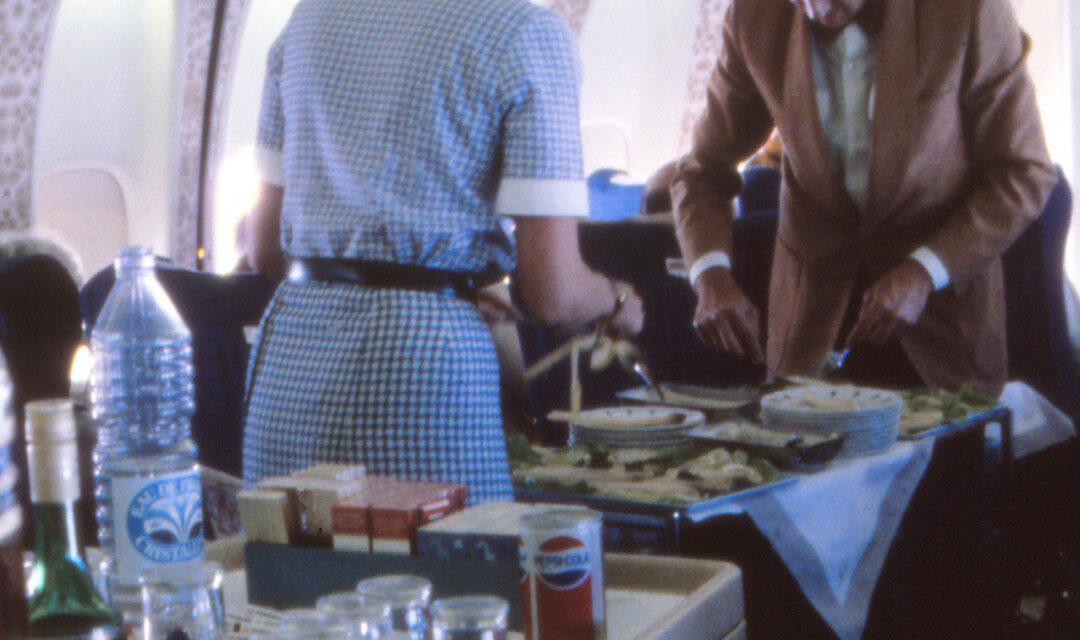
This analysis was inspired by a photo shared by Air France on its official social media accounts, which sparked the idea behind this work.
Air travel in the 1990s reflects a version of the aviation industry that operated under a different logic, one that becomes clear when you step back and look at the data, not just the memories.
This was not simply a more “comfortable” era. It was a period where airlines had not yet fully transitioned into the efficiency-driven, cost-optimized systems we see today. The product was still built around service consistency and passenger experience, rather than the systematic extraction of marginal revenue.
One of the clearest indicators is the onboard service model. In the 1990s, full meals were standard across much of the network, including short- and medium-haul flights. Catering was integrated into the ticket price, not treated as a separable revenue stream. Cabin crew operated under stricter service protocols, with multiple service rounds and a more formal interaction style.
At the same time, the physical configuration of the cabin reflected these priorities. Economy class seat pitch typically ranged between 31 and 34 inches, compared to around 28–30 inches on many aircraft today. This difference is not marginal, it directly affects perceived comfort, especially on flights beyond two hours. In operational terms, airlines were effectively sacrificing seat density for product quality.
From a revenue perspective, this aligns with a model focused on yield per passenger, not ancillary revenue. The now-standard unbundling strategy—charging separately for baggage, food, or seat selection, had not yet been systematically deployed. Pricing structures were simpler, less dynamic, and less dependent on real-time demand signals.
To understand why this model existed, deregulation is a key part of the story. The Airline Deregulation Act in the United States, followed by the liberalization of the European market through the Single Aviation Market in 1997, opened the door to competition, new entrants, and pricing flexibility.
However, by the 1990s, the full impact of deregulation had not yet materialized. Legacy carriers still dominated global networks, and although low-cost models (pioneered by Southwest Airlines) were already in place, their large-scale expansion in Europe (with players such as Ryanair) accelerated mainly in the 2000s.
The data reflects this transitional phase. Global airline load factors during the early-to-mid 1990s were typically in the range of 65%–75%, significantly below today’s levels, which consistently exceed 80%–85% (International Air Transport Association, WATS database). Lower load factors imply unused capacity, what can be described as operational slack. This slack allowed airlines to maintain higher service standards without immediate pressure to maximize seat utilization.
Airports also operated under different conditions. Before the structural break introduced by the September 11 attacks, security procedures were minimal compared to current standards. Passenger processing was faster, variability was lower, and overall system congestion was significantly reduced. This had measurable operational implications, particularly in terms of turnaround times and schedule reliability.
Equally important is the technological context. The aviation system of the 1990s was only partially digital. Bookings were largely handled through travel agencies and Global Distribution Systems, with limited direct interaction between airlines and passengers. Dynamic pricing existed in early forms but lacked the granularity and speed enabled by today’s data infrastructure.
This meant fewer optimization levers (but also fewer distortions). Prices were more stable, and the passenger experience was less fragmented.
What followed in the late 1990s and early 2000s was a structural shift. Deregulation, combined with digitalization and the rapid expansion of low-cost carriers, redefined the industry. Airlines moved toward higher load factors, denser seating configurations, and the systematic development of ancillary revenue streams.
From a data perspective, the contrast is clear. The 1990s aviation system prioritized service and product integrity, while today’s system prioritizes efficiency, scalability, and revenue optimization.
The difference is not about better or worse. It is about what the system was designed to do.
And in the 1990s, aviation was still designed (at least in part) around the passenger.
References
- International Air Transport Association (historical load factors)
- European Commission (1997 liberalization framework)
- International Civil Aviation Organization (historical cabin and operations data)
- MIT International Center for Air Transportation (airline cost structures and service evolution)
Photo by Air France


