Icelandair marked the end of an era yesterday, October 12, with the farewell flight of its iconic Boeing 757 “Hekla Aurora.”
The special journey celebrated one of the airline’s most beloved aircraft, which for nearly a decade carried the magic of the northern lights across the Atlantic, symbolizing the essence of Icelandic skies and culture.
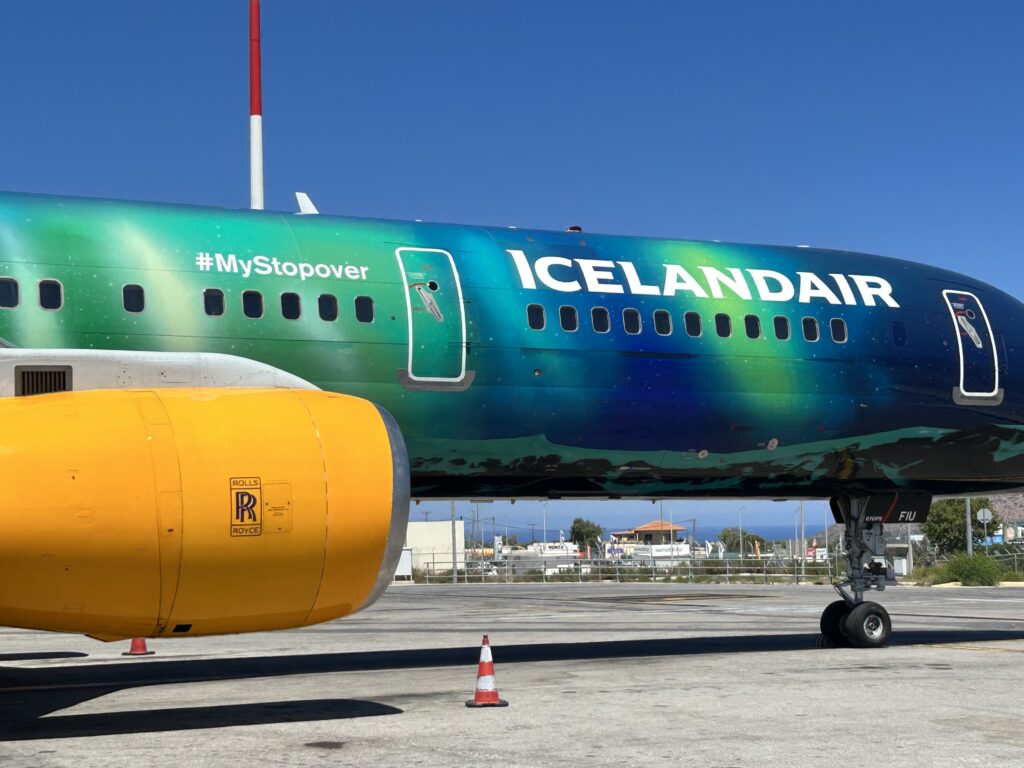
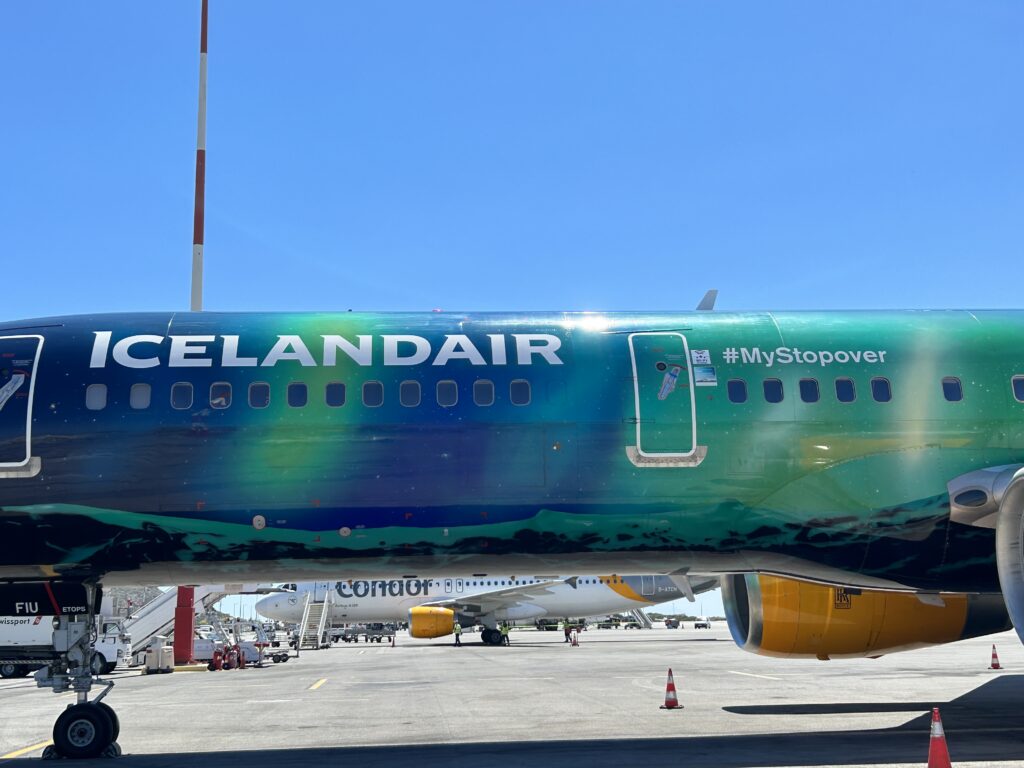
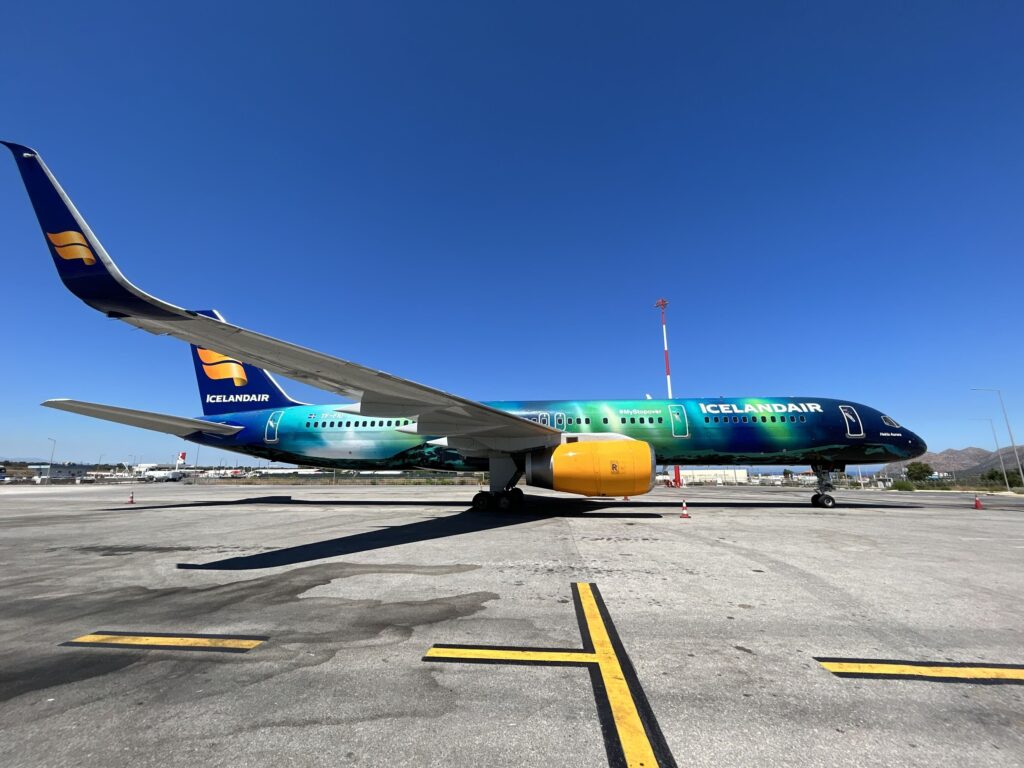
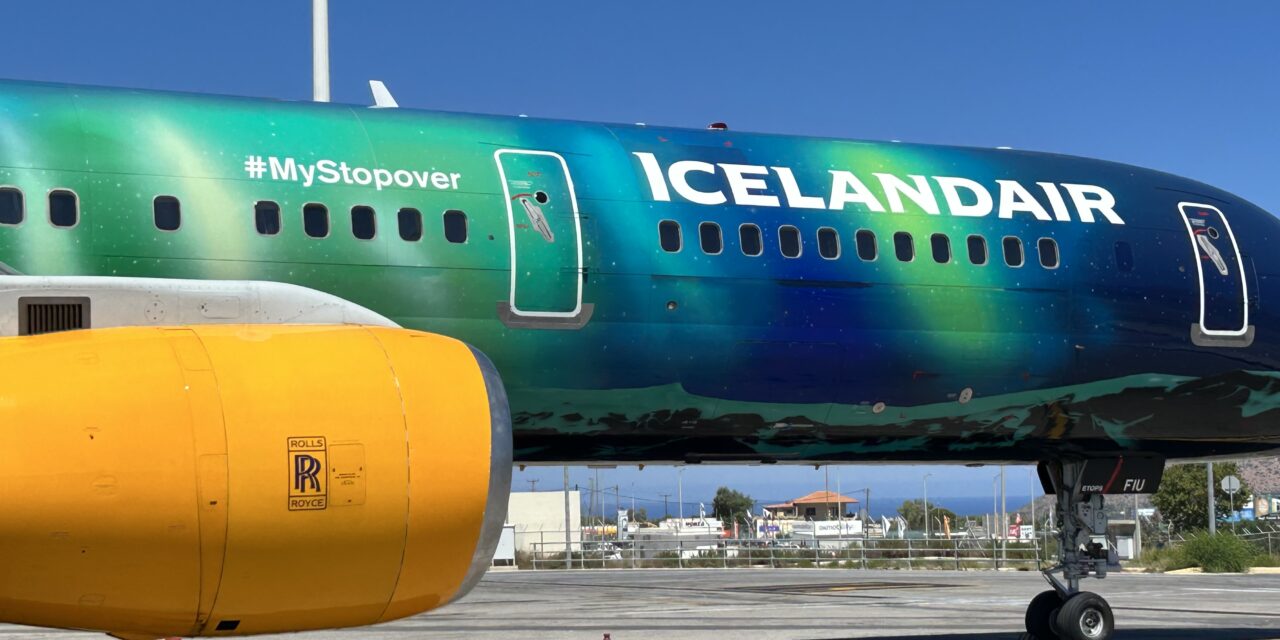
Introduced in 2015, the “Hekla Aurora” became a flying ambassador of Iceland, featuring a distinctive hand-painted livery inspired by the aurora borealis and an LED mood-lighting system recreating the northern lights throughout the cabin. The aircraft played a central role in the airline’s #MyStopover campaign, which encouraged travelers to discover Iceland’s unique landscapes by making a stopover in the country at no additional airfare.
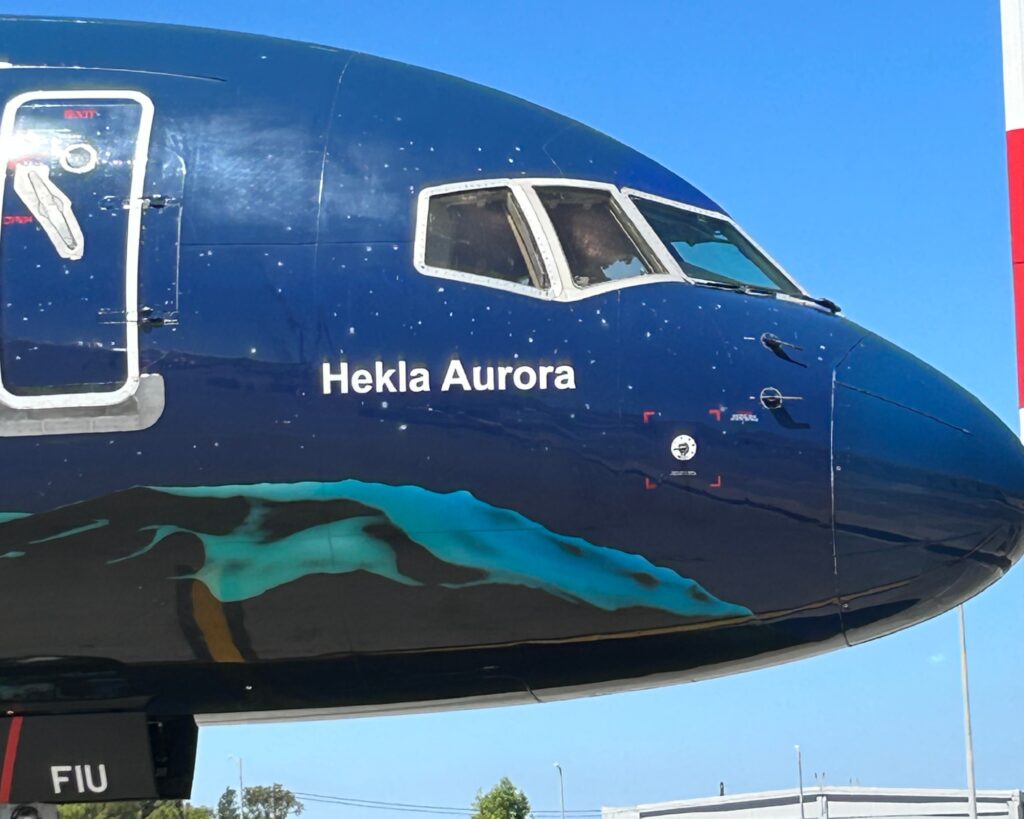
The name “Hekla Aurora” combines two iconic elements of Iceland: Hekla, one of the nation’s best-known volcanoes and a traditional Icelandic female name, and Aurora, a tribute to the northern lights. Together, they reflect Icelandair’s commitment to connecting passengers not only across continents but also with the natural beauty and identity of Iceland itself.
A personal encounter with “Hekla Aurora” in Crete
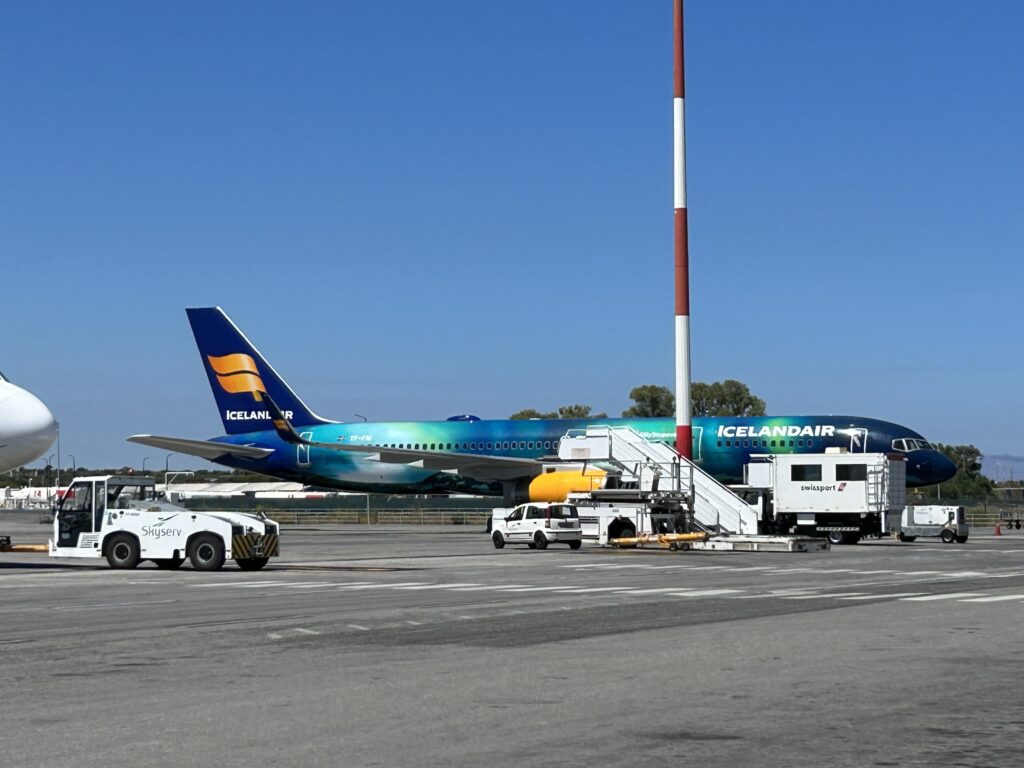
As someone who has long followed the evolution of Icelandair’s operations in Southern Europe, I had the chance to personally witness the presence of the “Hekla Aurora” in Crete during the airline’s seasonal service between Keflavik (KEF) and Chania (CHQ) in the summer of 2023. Between May 26 and September 29, Icelandair operated regular Friday flights on this route using the legendary Boeing 757-256 (Crete Aviation Observatory Data) sometimes in its classic livery and other times in the striking colors of the “Hekla Aurora.”
At that time, I was conducting on-site data collection at Chania International Airport as part of the Crete Aviation Observatory’s field research. On Friday, August 4, 2023, as I was leaving the airport, I noticed the “Hekla Aurora” parked elegantly on the apron, a stunning sight that immediately drew my attention. The next morning, during another data collection session, I observed that the aircraft was still in the same position, with its doors closed and no visible ground crew activity. A quick data check confirmed what I had suspected, a technical issue with the engines had temporarily grounded the aircraft. Icelandair was expected to send another Boeing 757 later that day to operate the replacement flight for the passengers who had been due to depart the previous evening.
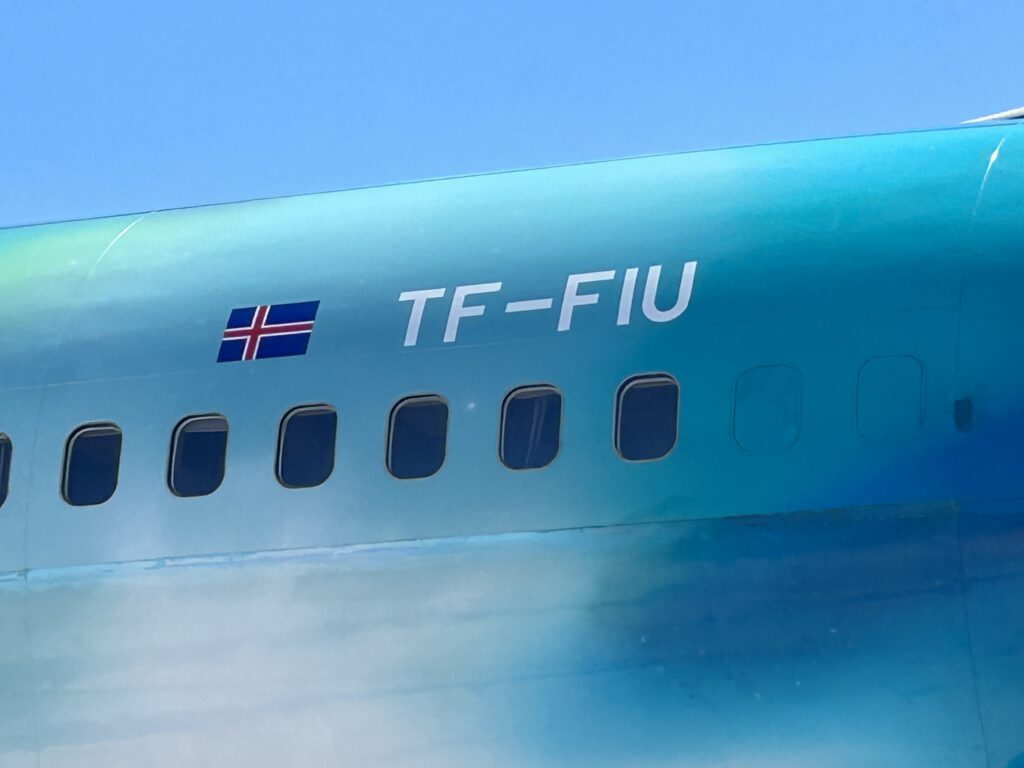
With the kind permission of the airport’s management and the valuable assistance of its excellent staff, I was able to approach the aircraft and capture a series of rare and memorable photographs, now part of my personal aviation collection, documenting a moment of unexpected proximity to one of the most distinctive aircraft in Icelandair’s history.
Yesterday’s farewell flight departed from Reykjavik Domestic Airport at noon, taking around an hour and a half to complete a scenic route over some of Iceland’s most remarkable natural landmarks. The route was carefully chosen based on weather and cloud conditions to ensure optimal visibility for passengers. Window seats were in particularly high demand, offering enthusiasts and aviation fans the best possible views during this historic flight.
Although there was no in-flight service, the experience was one of emotion and nostalgia, as passengers, crew members, and aviation enthusiasts came together to celebrate the legacy of an aircraft that has inspired thousands of travelers over the years. The “Hekla Aurora” leaves behind a legacy of innovation, design, and Icelandic pride, a true symbol of the airline’s spirit and its connection to the northern skies.
All photos featured in this section were captured exclusively by Dimitris Zopounidis during field research conducted at Chania International Airport in August 2023. Any reproduction, publication, or distribution without prior permission is strictly prohibited.
Photo © Dimitris Zopounidis — Chania International Airport, August 2023.