
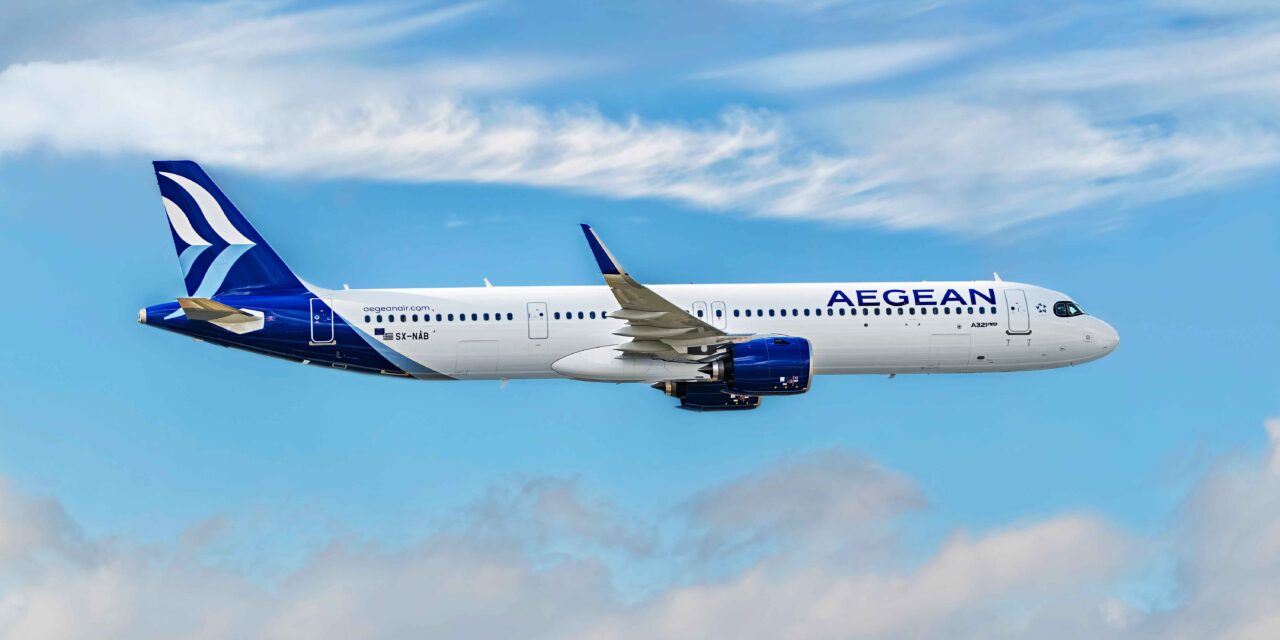
The recent decision by Aegean Airlines to cancel its plan to acquire the Airbus A321XLR reflects a strategic adjustment shaped primarily by operational timing and network economics.
While the aircraft had initially been considered a potential tool for expanding the airline’s network reach, delivery delays appear to have undermined the original business case behind the investment.
The A321XLR, developed by Airbus, has been widely promoted as a transformative aircraft for medium-sized carriers seeking to operate long and thin routes that were previously viable only with wide-body aircraft. With a range approaching 4,700 nautical miles, the aircraft allows airlines to connect secondary markets across continents with significantly lower operating costs. For an airline such as Aegean, whose geographical position places Greece at the crossroads between Europe, the Middle East and parts of Asia, the aircraft could theoretically open new network possibilities.
However, airline fleet decisions are rarely based on aircraft performance alone. Timing plays a critical role. In Aegean’s case, the expected delivery schedule appears to have shifted beyond the summer season that the airline had initially targeted for deploying the aircraft. In markets such as Greece, where airline profitability is strongly tied to the tourism cycle, the summer schedule represents the most important revenue-generating period of the year. Missing this operational window can significantly alter the financial attractiveness of a new aircraft program.
From a fleet strategy perspective, the decision highlights Aegean’s traditionally disciplined approach to growth. The airline has built its fleet around the narrow-body aircraft of the Airbus A320neo and Airbus A321neo families, which provide the right balance between capacity, range and operational efficiency for its largely European network. Introducing a new sub-type such as the A321XLR would have required adjustments in training, maintenance planning, crew scheduling and network deployment. For a carrier of Aegean’s scale, maintaining fleet simplicity remains an important operational advantage.
Another dimension worth noting is the evolving strategic role of long-range narrow-body aircraft in the global aviation industry. Aircraft like the A321XLR have generated strong interest among airlines seeking to experiment with new point-to-point routes and lower-density intercontinental markets. Yet their success ultimately depends on precise alignment between aircraft delivery timelines, network strategy and market demand.
In this context, Aegean’s decision can be interpreted less as a rejection of the aircraft itself and more as a pragmatic reassessment of its timing and operational fit. Fleet investments in aviation typically shape an airline’s cost structure and network strategy for decades. As a result, carriers often prioritize flexibility and financial discipline over the rapid adoption of new aircraft types.
For industry observers, the episode serves as a reminder that fleet planning is not solely about technology or aircraft performance. It is fundamentally about strategic alignment between market demand, operational timing and long-term network development. In Aegean’s case, maintaining a focused and efficient fleet structure appears to have taken precedence over the potential expansion opportunities offered by the A321XLR.


