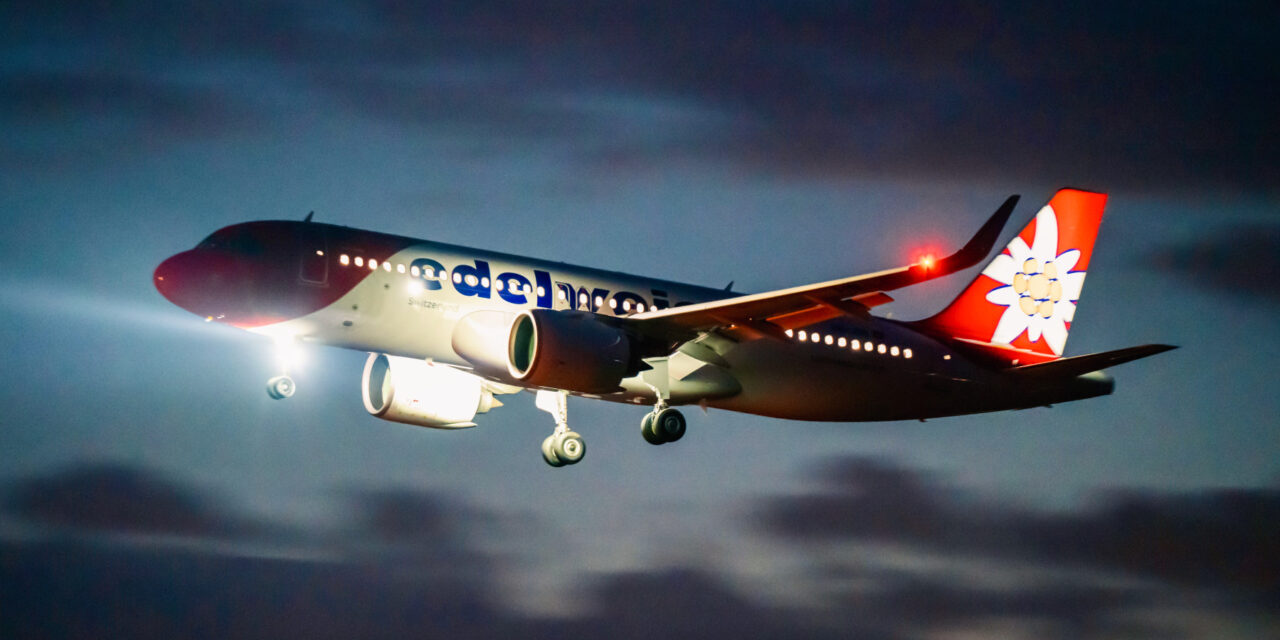
The arrival of the first Airbus A320neo into the fleet of Edelweiss represents more than a routine fleet addition; it signals the start of a structured transition in the airline’s short- and medium-haul operations.
The aircraft, registered HB-JDB, was delivered to Zurich in early April 2026 and is scheduled to enter commercial service on April 4, initially operating routes to Larnaca and Rhodes.
From a fleet strategy perspective, this move reflects a clear shift toward next-generation narrowbody aircraft, with a focus on efficiency, operational reliability, and product consistency. Edelweiss has outlined plans to introduce a total of six A320neo aircraft by 2028, gradually replacing older A320ceo units. This transition is aligned with broader industry trends, where fuel efficiency, emissions reduction, and noise performance have become central parameters in fleet planning decisions.
The timing of this renewal is particularly relevant when considering the current composition of the airline’s fleet. Edelweiss operates 15 Airbus A320 aircraft on its short- and medium-haul network, with several units approaching or exceeding two decades of service. In this context, the introduction of the A320neo is not only a technological upgrade but also a necessary step in maintaining operational competitiveness and managing lifecycle costs. Lower fuel burn and reduced maintenance requirements are expected to improve cost efficiency, especially in a market environment characterized by volatility in fuel prices and increasing environmental scrutiny.
At the same time, fleet renewal is closely linked to network development. For the summer 2026 season, Edelweiss is expanding its leisure-oriented network from Zurich, adding destinations such as Glasgow and Kefalonia, while also increasing frequencies or extending seasonal operations to markets including Faro, Kalamata, Larnaca, Varna, Zadar, Tbilisi, and Santiago de Compostela. The deployment of more efficient aircraft supports this expansion by enabling better capacity management and improved route economics.
Overall, Edelweiss’ entry into the A320neo segment illustrates how leisure carriers are adapting to a more demanding operating environment. The emphasis is no longer limited to network growth, but extends to the quality and efficiency of the underlying fleet. In this case, the A320neo functions as a key enabler, offering a balance between cost control, environmental performance, and service delivery.
The first delivery, therefore, should be viewed as the starting point of a broader strategic adjustment. For Edelweiss, the renewal of its short-haul fleet is not simply a replacement cycle, but a recalibration of its operating model in line with evolving market and regulatory conditions.