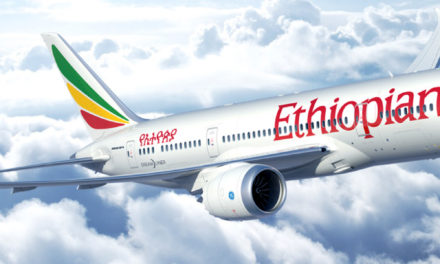

The European Union Aviation Safety Agency (EASA) has issued an Emergency Airworthiness Directive (EAD) for the Airbus A320 family, following the identification of a technical vulnerability in the flight-control system. The directive applies to all variants of the A320 series (A319, A320 and A321, both CEO and NEO).
This urgent action was triggered after recent analysis revealed abnormal behaviour linked to the ELAC (Elevator Aileron Computer), a core component responsible for controlling pitch and roll functions. Under certain conditions, a specific software version installed on the ELAC can process data incorrectly, potentially causing uncommanded aircraft responses. Although rare, this scenario is considered critical, which led EASA to move immediately.
Why the Directive Was Issued
The investigation began after a reported in-flight incident where an A320 experienced an unexpected pitch-down movement while the autopilot was engaged. Airbus traced the issue to a recently introduced software update on the ELAC B L104 unit.
The vulnerability is not structural and does not relate to the airframe. It is strictly a software-driven issue, highlighting how deeply modern flight-control logic depends on digital systems and data processing.
Airbus has already communicated the issue to operators through an Alert Operators Transmission (AOT), while EASA escalated it to an emergency directive to ensure uniform and immediate compliance across all fleets.
What Airlines Must Do
According to the directive, aircraft equipped with the affected ELAC version cannot operate commercial flights until corrective action is completed.
EASA requires airlines to:
- Apply the approved software fix or replace the affected ELAC unit before the next flight.
- Operate only limited ferry flights, without passengers, and up to three flight cycles, strictly for repositioning aircraft to maintenance facilities.
- Complete verification procedures to confirm safe return to service.
In short: if the aircraft carries the affected ELAC, it stays grounded until the issue is resolved.
Operational Impact on Airlines
The A320 family forms the backbone of short- and medium-haul operations across Europe, the Mediterranean, and global markets. As a result, the directive has immediate operational consequences:
- Fleet adjustments and temporary aircraft withdrawals
- Possible delays, cancellations, or schedule modifications
- Increased pressure on maintenance and engineering teams
- Short-term capacity constraints for airlines with large A320 fleets
While the required fix is relatively straightforward from a technical standpoint, the challenge lies in the scale: coordinating software rollbacks, unit replacements, and mandatory checks across hundreds of aircraft within tight timeframes.
What This Signals for Modern Aviation
Incidents like this underline a key characteristic of today’s aviation environment:
aircraft safety no longer depends only on mechanical reliability, but increasingly on the integrity of complex digital systems.
As manufacturers introduce more advanced computing and automation capabilities, even small software anomalies can create disproportionate operational risks. The rapid response from Airbus and EASA confirms the robustness of the aviation safety ecosystem, early detection, transparent communication, and immediate regulatory action.
Conclusion
The emergency directive for the Airbus A320 family is a reminder of the importance of proactive oversight in a highly digitalized aviation industry. Although the issue is technical and specific, its impact is broad due to the size of the A320 fleet worldwide. With corrective actions already in progress, airlines are expected to restore normal operations in the coming days, once all required inspections and fixes are completed.