
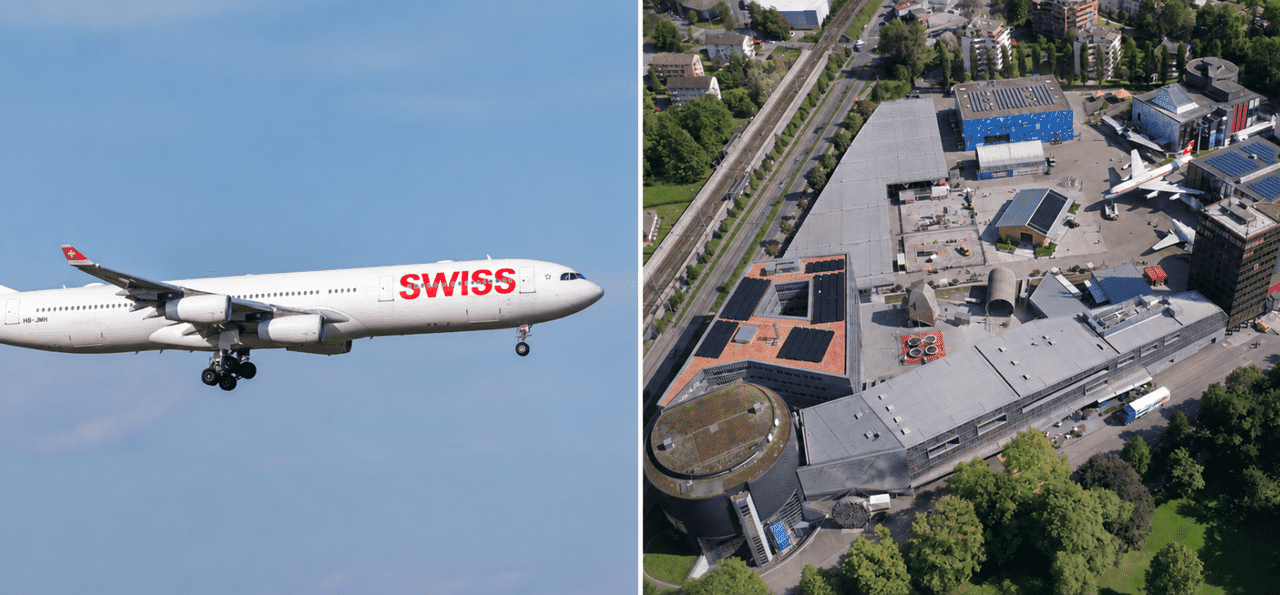
SWISS Plans Museum Home for Its Final Airbus A340-300
By Dimitris Zopounidis | aviationlife.gr
SWISS and the Swiss Museum of Transport have announced plans to preserve the airline’s final Airbus A340-300 in Lucerne after its withdrawal from service. Presented on 8 September 2026, the proposal targets arrival at the museum in early 2028. Implementation remains conditional on transport arrangements, regulatory approvals and financing.
The proposed donation concerns the last four-engined aircraft type in the SWISS fleet. It would join the museum’s Aviation and Space Travel exhibition, whose collection already includes a former Swissair Convair 990 Coronado. Displaying both would offer visitors an opportunity to examine different generations of Swiss long-haul aviation.
The aircraft’s dimensions help explain the practical challenge. SWISS lists its A340-300 at 63.66 metres in length and 60.30 metres in wingspan, with four CFM56-5C4 engines and a cabin accommodating 215 passengers. An aircraft of this size places considerable demands on the space and infrastructure needed for its transfer and installation.
The partners envisage moving the aircraft from Zurich Airport to Lucerne, supported by feasibility studies, specialised transport arrangements and structural works. Their announcement refers to an aircraft weighing approximately 125 tonnes for the undertaking. The transport solution and necessary permits remain to be secured.
SWISS would donate the aircraft, while the museum would finance its relocation, construction work and the development of the interior exhibition. Preliminary estimates place these costs in the high single-digit millions. Funding must be secured by the end of 2026, with foundations, private patrons and companies expected to make a substantial contribution. A fundraising committee is already seeking support.
From a project appraisal perspective, the donation resolves only part of the financial challenge. Making the aircraft accessible to the public requires additional investment, and assessing the exhibition’s long-term viability would also require estimates of conservation, staffing and operating costs. These considerations matter because the value of a preserved aircraft depends partly on the museum’s capacity to maintain it and explain its history over time.
The museum has outlined an educational purpose for the project. Plans include an interior experience introducing visitors to long-haul aviation and its technology, alongside educational activities for school pupils and other interested audiences. This provides a basis for presenting the aircraft through its engineering, operational history and the experience of those who worked aboard it.
The proposal comes as SWISS replaces the A340-300 with the Airbus A350-900. The airline received its first A350 in October 2025 and plans to introduce ten aircraft of the type by 2031. The museum project therefore coincides with a change already under way in the airline’s long-haul fleet.
That transition offers a useful subject for the future exhibition. A preserved A340 could help visitors examine how propulsion, cabin design and airline operating requirements have evolved. Technical records, crew accounts and explanations of maintenance practices could connect the airframe to the work that kept it flying. The educational opportunity lies in using the aircraft to explain the decisions and skills behind long-haul operations, while retaining the physical evidence of an earlier generation of air transport.
Photo by SWISS


