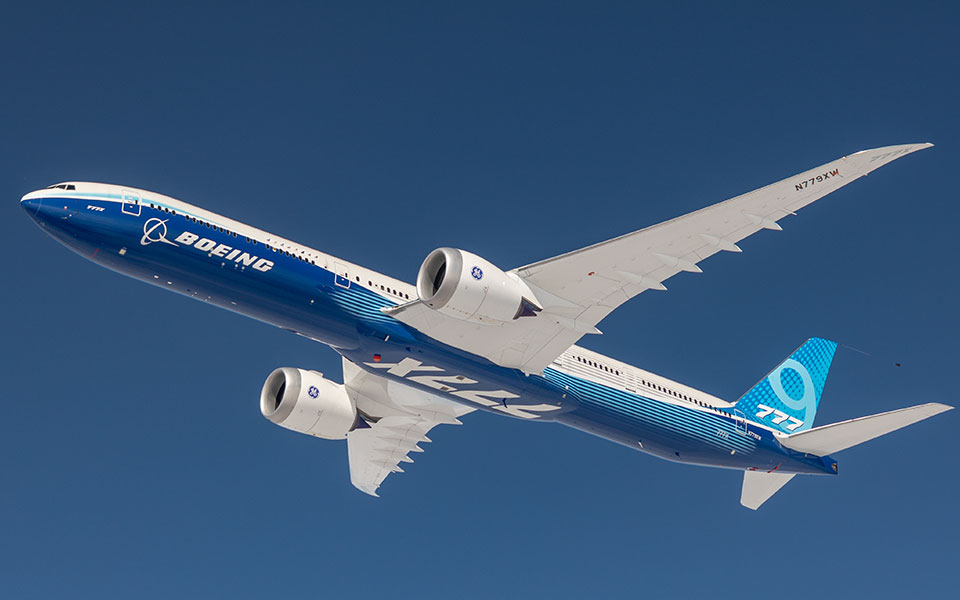
Boeing faces yet another delay in its 777X program, with first deliveries now expected in 2027, according to Bloomberg.
This marks the seventh postponement for one of the manufacturer’s most ambitious aircraft programs, highlighting ongoing operational and financial challenges for the U.S. aerospace giant.
A Program with a Heavy Legacy
Launched in 2013 as the successor to the highly successful 777-300ER, the Boeing 777X was designed to achieve up to 10% lower fuel burn and emissions, thanks to its new GE9X engines and folding composite wings. However, it has evolved into one of Boeing’s most complex projects, both technically and from a certification standpoint, with total development costs exceeding $10 billion.
The company had already pushed back the first delivery to 2026, but now sources indicate that Lufthansa, the aircraft’s launch customer, does not expect to receive it before 2027.
Certification and Financial Impact
Boeing CEO Kelly Ortberg stated in September that there remains a “mountain of work” ahead for certification, though no new technical problems have been identified. This phrase captures the extensive bureaucratic, engineering, and regulatory hurdles Boeing must overcome to meet the FAA’s stricter post-737 MAX standards.
Wall Street analysts estimate that the new delay could result in an additional charge of between $1 and $4 billion in Boeing’s third-quarter earnings, while also affecting free cash flow projections for 2026.
Impact on Airlines
For carriers such as Lufthansa and Emirates, which had integrated the 777X into their medium-term fleet strategies, the delay means they will continue to rely on existing widebody types like the Airbus A350 and Boeing 777-300ER. Within the Lufthansa Group, this delay coincides with its fleet harmonization strategy through 2028, potentially reducing short-term operational disruption but limiting the introduction of new-generation premium cabins.
A Critical Bet for Boeing’s Future
The 777X’s success remains essential for Boeing’s long-term position in the widebody market. Following crises surrounding the 737 MAX and delays in the 787 program, Boeing urgently needs a reliable, profitable project to restore confidence among investors and airline customers.
If certified and delivered without further issues, the 777X could still redefine long-haul operations with greater efficiency and passenger comfort. Yet, every new delay risks eroding Boeing’s competitive edge against Airbus, whose A350-1000 continues to secure orders and deliveries globally.
Analysis by Dimitris Zopounidis