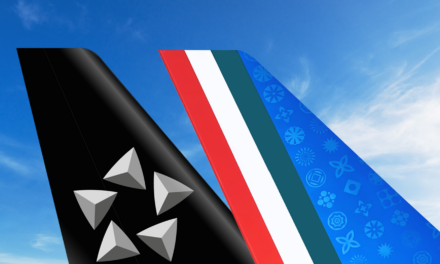

Singapore Airlines has returned to the top of the World Airline Awards, but the more revealing story sits below first place. Asian and Middle Eastern carriers continue to dominate the upper end of the ranking, European airlines remain comparatively scarce in the top tier, and no US carrier appears among the global top 20. The results offer a useful snapshot of where passengers perceive service quality to be strongest in 2026.
Singapore Airlines has been named the World’s Best Airline for 2026, moving from second place in 2025 and displacing Qatar Airways, which falls to second. Cathay Pacific remains third, while ANA All Nippon Airways and Turkish Airlines complete the top five.
The changes at the top are relatively small. The implications are larger.
Six of the ten highest-ranked airlines are Asian carriers. Two more, Qatar Airways and Emirates, are based in the Gulf. Only two European operators, Turkish Airlines and Air France, make the top ten. No North American airline does.
The ranking therefore provides more than an annual list of passenger favourites. It captures a persistent geographical divide in perceived airline service quality at a time when carriers are competing for premium traffic, investing heavily in cabins and lounges, and attempting to differentiate products built increasingly around the same families of aircraft.
Asia retains the centre of gravity
The 2026 top ten is led by Singapore Airlines, followed by Qatar Airways, Cathay Pacific, ANA, Turkish Airlines and Emirates. Air France ranks seventh, followed by Hainan Airlines, Japan Airlines and Korean Air.
The geographical concentration is striking.
Singapore, Hong Kong, Japan, China and South Korea account for six positions in the top ten. Qatar and the United Arab Emirates add another two. Europe is represented only by Turkish Airlines and Air France.
This does not demonstrate that Asian airlines are universally superior businesses. Skytrax measures passenger satisfaction, not profitability, punctuality, financial resilience, safety performance, emissions efficiency or network productivity.
What the results do indicate is a persistent advantage in perceived service.
That distinction matters because commercial performance and customer experience are not interchangeable.
A highly profitable airline may operate an extremely efficient network without offering the industry’s most highly rated passenger product. Conversely, an airline can invest heavily in service without necessarily producing superior returns for shareholders.
The World Airline Awards sit primarily on the second side of that equation.
For Singapore Airlines, however, the 2026 result is notable for its breadth.
The carrier secured the overall title for the sixth time and also ranked first for World’s Best Economy Class and economy-class onboard catering. That combination is significant because the economics of premium network carriers extend far beyond business and first class.
An airline can build prestige at the front of the aircraft. Sustaining passenger satisfaction across economy cabins is a different challenge, particularly at scale.
Singapore and Qatar remain locked at the top
The first two positions simply reversed between 2025 and 2026.
Qatar Airways ranked first in 2025, with Singapore Airlines second. This year Singapore moves to first and Qatar to second. Cathay Pacific remains unchanged in third.
That stability is itself informative.
Breaking into the upper tier of global airline service appears difficult. The same carriers repeatedly compete around the top because their products extend beyond individual cabin features.
Singapore Airlines benefits from Changi Airport and a network structured around long-haul connecting traffic. Qatar Airways has built a comparable connecting proposition through Doha, using its geographic position to link Europe with Asia, Africa and Australasia.
In both cases, the passenger product is an ecosystem rather than simply a seat.
Lounges, transfer infrastructure, catering, cabin design, crew service, digital interfaces, schedule connectivity and brand consistency collectively determine the experience.
The division between the two leaders is also visible across cabin classes.
Qatar Airways retained the title for World’s Best Business Class in 2026, ahead of Singapore Airlines and Cathay Pacific. Singapore, meanwhile, ranked first in economy class.
The results point towards two slightly different competitive strengths. Qatar continues to set a particularly strong benchmark in the premium cabin, while Singapore’s advantage appears to extend more broadly across the aircraft.
Cathay Pacific stabilises while STARLUX advances
Cathay Pacific remained third globally and was named the World’s Best Cabin Crew.
Its position is important when viewed against the disruption experienced by Hong Kong aviation earlier in the decade. The carrier’s continued presence among the top three suggests that Hong Kong has retained a highly competitive premium aviation brand even as the balance of Asian aviation continues to evolve.
Further down the ranking, STARLUX Airlines provides one of the more interesting movements.
The Taiwanese carrier climbed from 18th in 2025 to 13th in 2026, a five-position improvement. It was also named the World’s Cleanest Airline.
For a relatively young airline competing against carriers with decades of brand recognition, the rise is significant. It also illustrates that the premium segment is not entirely closed to new entrants.
Scale helps. Legacy helps. Neither guarantees passenger preference.
Europe’s strongest performers are becoming clearer
Turkish Airlines is the highest-ranked European carrier, placing fifth globally and taking the Best Airline in Europe title.
Air France follows at seventh globally and also leads the first-class category.
The positioning of the two airlines illustrates two different European strategies.
Turkish Airlines has developed Istanbul into one of the world’s major connecting hubs and built an unusually extensive network across Europe, Africa, Central Asia, the Middle East and Asia. Its competitive strength combines service with network breadth.
Air France is taking a different route, placing increasing emphasis on the premium end of the market. Its movement from eighth globally in 2025 to seventh in 2026 is modest in numerical terms, but its first-class leadership reinforces that premium positioning.
Below them, the picture becomes more mixed.
Lufthansa ranks 14th, Iberia 16th, Virgin Atlantic 18th and SWISS 19th.
British Airways provides one of the more notable year-on-year movements, falling from 13th in 2025 to 23rd in 2026, a decline of ten positions.
That should not be interpreted as a ten-position deterioration in the underlying economics or operational quality of the airline. Survey rankings do not work with that level of precision.
It does, however, show how passenger perceptions can diverge among airlines that are otherwise major competitors in the same intercontinental markets.
For Europe’s traditional network carriers, this is commercially relevant. On routes where several airlines can transport a passenger between broadly similar origin and destination combinations, perceived quality becomes another competitive variable alongside schedule, price, loyalty programme and connectivity.
The US carriers are conspicuously absent
No US airline appears in the global top 20.
Delta Air Lines, the highest-ranked American carrier, sits at No. 25.
The result is particularly striking when compared with the economic scale of the US aviation industry.
American, Delta, Southwest and United operate within one of the largest domestic aviation markets in the world. Their networks, customer mix and economics differ substantially from airlines such as Singapore Airlines, Emirates and Qatar Airways, whose global brands depend heavily on long-haul international connectivity.
This helps explain why financial scale and passenger-experience rankings can produce very different league tables.
A large US airline can generate enormous revenue, operate hundreds of aircraft and control strategically important hubs without replicating the service model of a premium Asian carrier.
The two business systems are optimised around different market structures.
The ranking therefore should not be read as evidence that one model is commercially superior. It shows that passengers evaluate them differently.
Low-cost carriers operate under another set of economics
The low-cost rankings make that distinction even clearer.
AirAsia was named the World’s Best Low-Cost Airline for the 17th consecutive year. Scoot placed second and Vueling third, making the Spanish carrier the highest-ranked European low-cost airline.
Ryanair ranks 11th globally among low-cost carriers and sixth within Europe. easyJet is 13th globally and eighth in Europe.
Those positions contrast sharply with their commercial scale.
Ryanair is one of Europe’s dominant airlines by passenger numbers, yet passenger-volume leadership does not translate directly into service-ranking leadership.
Nor should it.
The low-cost model was designed around a different optimisation problem. Fare, aircraft utilisation, turnaround time, direct connectivity, ancillary revenue and cost control can matter more to the business than maximising every element of passenger experience.
For many customers, the decision is rationally straightforward. A direct flight at the right time and price may have greater utility than a higher-rated onboard product involving a connection or substantially higher fare.
Service rankings consequently capture only one dimension of airline competitiveness.
Aegean gains seven places
The Greek market provides another useful case.
Aegean Airlines rises from 47th globally in 2025 to 40th in 2026, a seven-position improvement.
It also retains its position as Best Regional Airline in Europe, ahead of Air Dolomiti, Air Serbia, Air Nostrum and Air Greenland, while ranking fourth among airlines in Southern Europe behind Turkish Airlines, Iberia and Vueling.
The numbers require context.
Aegean does not have the long-haul network of Air France, Lufthansa or Turkish Airlines. Athens is also a substantially smaller connecting hub than Paris Charles de Gaulle, Frankfurt or Istanbul.
Its competitive position is therefore structurally different.
The airline operates from a home market characterised by substantial tourism flows and pronounced seasonality. Greece generates strong summer demand but presents airlines with the more difficult question of how to deploy capacity efficiently outside the peak tourism period.
Within that environment, service can become an important differentiator.
The seven-position global improvement should not be overstated because changes in survey rankings can reflect multiple factors. More relevant is the combination of the improvement with Aegean’s continued leadership in the European regional category.
That consistency suggests that passenger perception remains an identifiable competitive asset for the Greek carrier.
Reading the numbers correctly
The World Airline Awards are based on a global passenger survey conducted from September 2025 to August 2026.
More than 300 airlines were included. Respondents represented more than 100 nationalities, and the survey was available in eight languages.
Passengers assess multiple elements of the travel experience, including cabin service, boarding, staff efficiency, airport processes, baggage delivery, seat comfort, cabin cleanliness, inflight entertainment, Wi-Fi, food and beverages, and value for money.
Skytrax says duplicate, suspect and ineligible entries are identified and removed, while weighting is used to improve comparability between airlines of different sizes.
These characteristics make the dataset useful, but they also establish clear analytical boundaries.
The ranking measures perceived passenger satisfaction.
It does not provide a composite measure of airline quality in the broadest economic or operational sense.
An airline ranked fifth could have weaker profitability than one ranked 30th. An airline outside the top 20 could have better punctuality, stronger labour productivity or a more resilient balance sheet. Another could have lower carbon intensity per passenger kilometre.
Those questions require different datasets.
This is particularly important when rankings are used in public discussion. The term “best airline” is intuitively broader than the variables actually being measured.
A more precise interpretation is that these are airlines producing some of the strongest passenger satisfaction outcomes within the Skytrax survey framework.
The economics of experience
That limitation does not make passenger perception economically irrelevant.
Quite the opposite.
Service quality can function as an intangible asset.
A strong passenger reputation can contribute to loyalty, repeat purchasing, frequent-flyer engagement and corporate travel relationships. In markets with sufficient willingness to pay, it may also support premium pricing.
This becomes increasingly relevant as the technological differences between airline fleets narrow.
Singapore Airlines, Qatar Airways, Cathay Pacific and European competitors can all purchase aircraft from Airbus or Boeing. The A350 and 787 are global platforms. Cabin seats, entertainment systems and connectivity technology are available from a relatively concentrated international supplier base.
Hardware can therefore converge.
What surrounds the hardware does not necessarily converge at the same speed.
Recruitment, training, service culture, catering, airport processes, disruption management and consistency across a large network are organisational capabilities. They cannot simply be ordered from an aircraft manufacturer.
This helps explain the persistence at the top of passenger rankings.
The ranking behind the ranking
The most important number in the 2026 World Airline Awards may not be Singapore Airlines’ No. 1 position.
It may be eight.
Eight of the global top ten positions are occupied by airlines from Asia and the Middle East. Europe accounts for two. North America accounts for none.
That concentration provides a clearer strategic signal than small movements between adjacent positions.
The airline industry is simultaneously pursuing two forms of optimisation.
The first concerns efficiency. Airlines need lower unit costs, productive fleets, strong load factors, effective capacity allocation and increasingly sophisticated digital operations.
The second concerns differentiation. Airlines need passengers to perceive a reason to choose them when competitors can offer broadly comparable aircraft and overlapping networks.
Different business models place different weights on those objectives.
Ryanair demonstrates that enormous commercial scale can coexist with a relatively modest position in passenger-service rankings. Qatar Airways demonstrates how premium product investment can become central to an airline’s international brand. Singapore Airlines shows how that proposition can be extended beyond the premium cabin. Aegean illustrates how service differentiation can matter for a smaller carrier operating without the scale of Europe’s largest network groups.
The 2026 results consequently tell us less about which airline is objectively “best” and more about where the passenger-experience advantage currently sits.
For now, it remains concentrated in the East.
And as aircraft technology becomes progressively more accessible across competitors, the harder competitive advantage to reproduce may not be the aircraft at all.
It may be everything that happens around it.
Analysis based on the 2026 World Airline Awards and the published Skytrax passenger-survey methodology. Rankings represent passenger perceptions within that methodology and should not be interpreted as comprehensive measures of airline financial, operational, environmental or safety performance.